
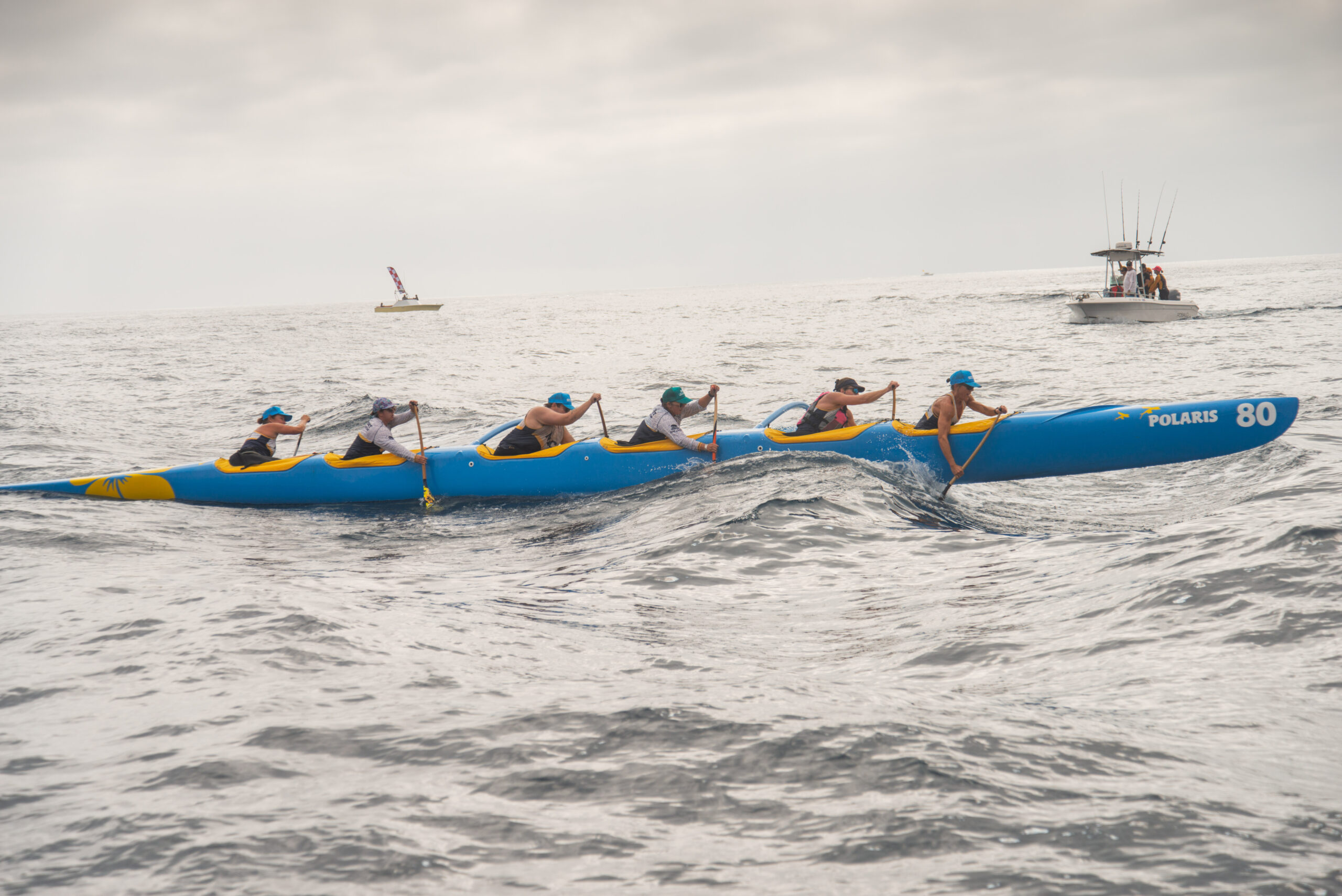
The Catalina Crossing.
It’s a lot.
A lot of training. A lot of miles. A lot of logistics. A lot of uncrustables. A lot of moving pieces. And, naturally, a lot of opinions on what our post-race team T-shirt should look like.
2026 also marks 20 years since my first Catalina Crossing.
Which is a little wild to think about, because at 16 years old, I had absolutely no idea what went into this race. Twenty years later, I can confidently tell you: it’s a lot.
It’s a race filled with hard race moments. Months of training, early mornings, long Saturdays, babysitter scheduling, boat prep, escort boats, logistics, and all the little things that somehow have to come together on one weekend.
And then you cross the finish line.
There’s the excitement, of course. But for me, there’s also this huge sense of relief. The season is behind you, and the work is done. You made it across! Everyone made it across. And almost immediately, you realize you’ll miss it.
So this is type 2 fun, huh?
The Catalina Crossing is a big goal at the end of the season, but it looks different for everyone. Some paddlers have to check themselves back into reality and realize that this year, Catalina just might not be in the cards. Others know they’re going and now the goal becomes cracking that top ten.
Top ten? Yes. We’re being realistic here.
Catalina isn’t just our usual California crews. Teams travel in from Oahu, the Big Island, Maui, the Pacific Northwest, the East Coast, Florida, Canada, and beyond. You line up at the Wedge and suddenly you’re racing against crews you haven’t seen all season.
SATURDAY: We got lucky with conditions.
We had swell that wanted to push us toward the end of the island, with wind expected later in the day that could help push us back west. Toward the end of the race, that wind started wrapping around the island and coming at us as a headwind.
But who cares about the wind? Let me tell you about the sea life.
Flying Fish, Molo Molos, Dolphins, and Thresher sharks. It was a National Geographic show out there in the channel!
There are moments when you’re racing and completely locked into what’s happening in the canoe, and then someone yells that there’s a shark or a dolphin starts cruising next to you, or a Molo Molo appears, and suddenly you remember where you actually are.
In the middle of the Pacific Ocean. Paddling from one island to another and its pretty freaking cool.
Okay, back to racing.
I think our Open Women’s crew managed to find the only head-high wave 100 miles off Catalina and, naturally, it was directly in front of the photographer. (just remember that photos never do it justice)
We took it straight over the gunnel. Our spray skirts did their best, but there was no keeping all that water out. The auto pump started working overtime, but it wasn’t enough. So during the next 2 water changes, hand-bailing became part of the plan. But we kept moving.
We started picking crews off one by one, and once we passed them, we weren’t letting them walk back up on us. The coeds started coming through. They started ten minutes behind us, and instead of letting that mess with us, we fed off their energy and made them work for every pass.
The ama was light and we were moving together. Our water changes were smooth, even if they started slowing down juuuuust a little toward the end.
But we were in it together.
Every hard practice. Every early morning. Every pre-race talk. Every mile that got us to this point – we had done it together.
And now it was time to finish the race together.
Six coed crews passed us over the course of the race (including the Oceanside juniors, and credit where credit is due, those kids were FLYING).
But we held off the other 20. And kept going.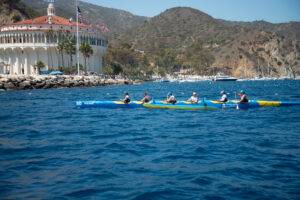
FULL CIRCLE
My first Catalina Crossing was in 2006.
I was 16 years old, and the night before the race, after practice, my coach Sam told me I was racing the next day.
That was it.
Imagine being 16, going home and telling your parents, “Hey, so… I’m paddling from Newport to Catalina tomorrow.” They went with it, which didn’t surprise me. They trusted NAC, the program, and my coaches, and that trust made them comfortable letting me cross the channel the very next day.
So there I was. No season-long build-up for me. No obsessing over the roster. No months spent thinking about race strategy, escort boats, changes, conditions or any of the million little things I now know go into getting a crew across that channel.
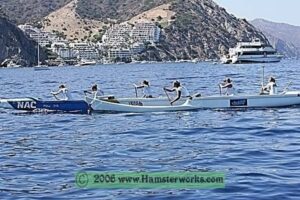
Catalina 2006, best photo we could find!
I just got in the canoe. The 204 Bradley with the aluminum Iakos.
And maybe that’s what feels so full circle now.
Twenty years later, I’m still getting in the canoe. Except now I understand all of it. The training. The logistics. The people behind the scenes. The responsibility you feel for your crew. The nerves. The decisions. The hard parts. And just how special it is to get nine people to a start line healthy, ready, and trusting each other enough to paddle across an ocean together.
Sixteen-year-old me had absolutely no idea what she was getting herself into.
Honestly, I’m glad she didn’t.
Because twenty years later, apparently I’m still into this type 2 fun.
– Kelly Thompson Schwartz
Congratulatios for the planning traing and participating. Don’t know how you do it. I am awed that you do it all.