
Throughout the rowing season, athletes are presented with chances to reframe challenges as opportunities to perform. Over the last three weeks, the varsity boys have known they had a 6k erg test on the books. Most of you know about the 2k erg test as being the standard for racing, but throughout the fall and winter, the 6k distance is the benchmark for coaches. The 6k test is a good indication of an athlete’s aerobic base and mental fortitude. I like to think about the season from a training perspective as building a pyramid. You start the year with the foundation, which consists of technique, breathwork, and long, monotonous training pieces. The next layer consists of “steady state” rowing, which can be thought of as the bread and butter of your training. Steady-state rowing is aimed at developing your heart’s ability to properly pump oxygen into your muscles over sustained periods of time. The next layer, which has been the focal point of the past few weeks, has been longer interval training aimed at increasing intensity and pushing towards your body’s physical and mental limit over an elongated period of time. On the actual day of an erg test, the training is over. You have either done the work and are prepared, or you’re not. Focused effort compounds over time; there is no substitute.
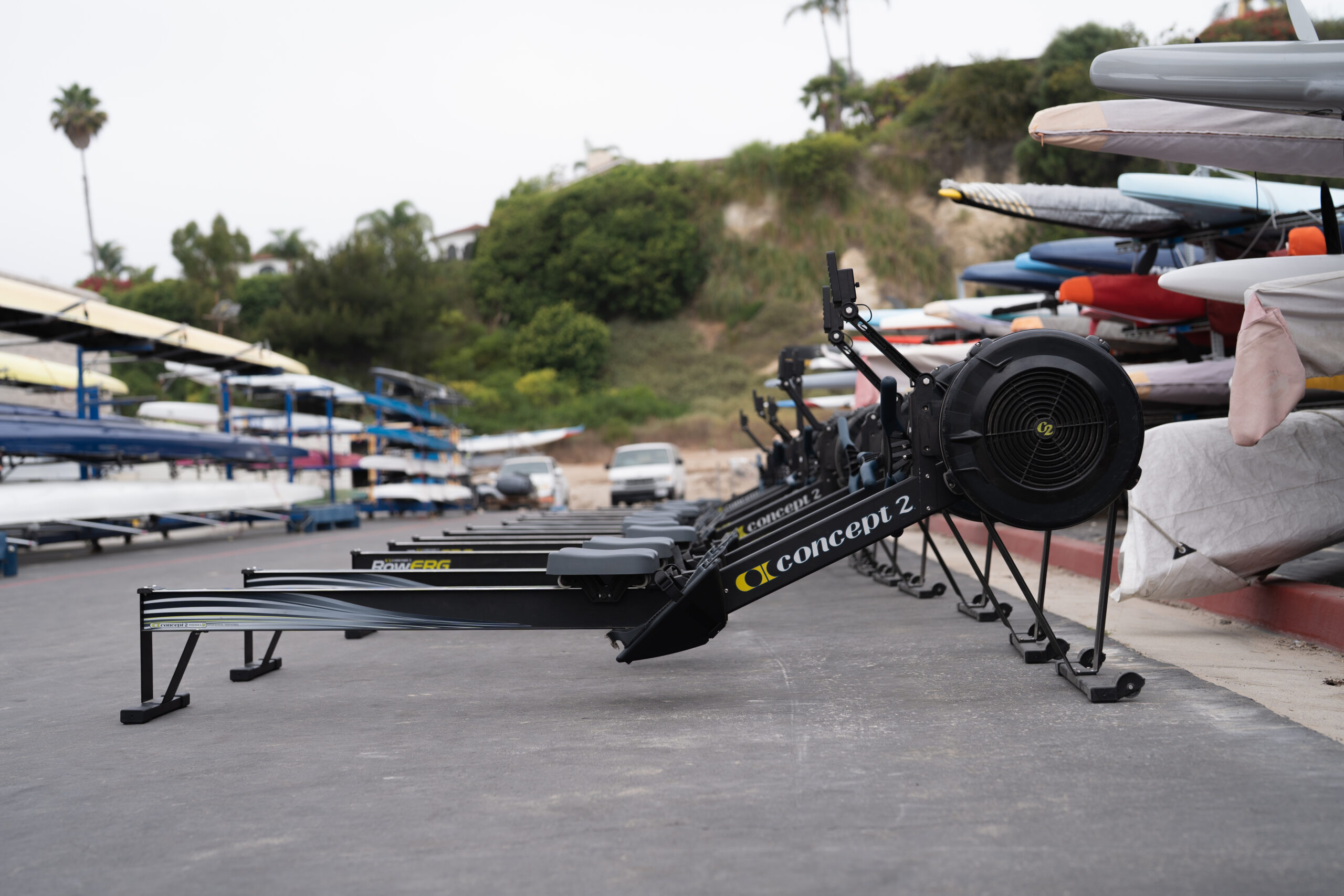
When the boys came in, the rain was falling down, and the music echoed against the hulls of the boats on the racks. The ergs were aligned, and I hoped their minds would fall in line with their bodies so that they could perform at their best. Test and race days are where you find out if you are just a rower, or if you are a racer as well. One of my favorite sayings is, “The real competition is you vs. the you of yesterday.” I wanted to see who could rise to the occasion and make the leap when their mind attempted to talk them off the edge.
To excel at rowing, you must learn how to steer your mind and not make deals with it.
The 6k test takes between 20 and 24 minutes depending on your speed.
Learning how to stay calm between the ears is a crucial skill over these longer pieces.
When the test began, they were off to the races. The coaches watched and helped motivate; the coxswains did the same. There were furrowed brows and gritted teeth. Sweat seeped into the concrete below them. As they passed the five-thousand-meter mark, the finish line was in sight. The stroke rate came up, and the intensity followed in lockstep. The boys finished strong, and most of them felt fulfilled about the capstone from their first block of training.
As we head into the dark days after the time change, we will spend a lot more time on the ergs, working on the boys’ physical fitness and attempting to facilitate the growth of mental toughness. I’m really looking forward to seeing how they continue to learn to reframe challenges as opportunities and seeing them make the most of those opportunities.
– Assistant Boys Varsity Coach Luke