
NAC Va‘a California is a growing race series designed to challenge paddlers in the V1 craft throughout California! Each year, we grow the series more, as more paddlers jump into a rudderless canoe!
As we keep that momentum going, we’re especially stoked to see more women showing up, pushing themselves, and stepping into leadership on the water. Their impact on this series is huge—not just in the race results, but in the example they set for the next generation of paddlers who are watching, learning, and dreaming bigger because of them.
We had paddlers join us from NorCal, including Enav and Mary Beth. Lori traveled out from Arizona to race with us, and we were also stoked to see a strong showing from SoCal, with Suzy Strazulla, Ann Matteson, Demitrack, Hisano Tasedan, and Pilar Cayton on the start line, respectively in Long Course and Short Course.
A special shoutout to Poppi, our 19U Long Course racer, for stepping up and taking on the challenge. We also want to recognize Makapo adaptive paddler Janet Wu, who competed in the three-mile course in a tide that was anything but forgiving—showing determination, resilience, and true ocean spirit every stroke of the way.
Below are race recaps from Sarah Donovan, Leah Ching, Kathy Sheets, and Kelly Truitt!
My first time in the NAC Va’a series was amazing! I was really excited to participate in a race with only V1’s.
As a new V1 paddler with only a few big boat seasons under my belt, I had a lot to learn leading up to this race. I started attending Willie’s morning workouts, where many of the paddlers took time to help me improve, offer tips, and simply comment on my progress. I am forever grateful for Willie’s group. Saturdays, I joined Will’s and Ruben’s groups, where I was exposed to the speed of the starts.
But man, I wasn’t prepared for Saturday’s conditions! The start into the chop was fun and fast, even the chop on the ama and surfing was fun and I completely forgot I was racing, just soaking in the experience. There was also plenty of room for fishtailing and waves I should have caught. Getting out more in those conditions is definitely something I need to work on.
Then I approached the harbor mouth. I had been out once and surfed the harbor mouth so I knew it stacked up, but never the tide swing, wind, or rip that I had to paddle on Saturday. I just put my head down and grinded, and by some luck, I made it through, though not without some sketchy situations and frustration.
My race was quite the adventure! It felt like everything that could have gone wrong did, except for a huli. I took a bad line and watched my competitors cruise into the harbor while I battled the rip in the middle of the harbor mouth. I had to spider my ama twice to stay upright and lost my paddle once, but I managed to grab it by my fingertips. I had to bail my canoe twice, accidentally tossed a BLOK wrapper, and had to retrieve it from the sea. I lost the connection to my music for a bit, but it started playing again luckily. At the end I almost cried when I couldn’t get my boat to turn left at the end of the race; my canoe wanted to go up the Dunes launch ramp instead of towards NAC. Finally, I managed to turn it, but I almost clipped the log boom can, and I think my ama did hit it. I paddled through the doritos, and it was the best experience ever. That stoke is indescribable, but it’s so worth every minute of discomfort. If it’s comfortable, it’s not worth. I can’t go back in time and change anything, but I can move forward with the experiences and only improve.
Also, the beer and camaraderie post race are rewards enough. It’s the best way to spend a Saturday.
Alameda Bay, let’s go!
Sincerely,
Sarah Donovan
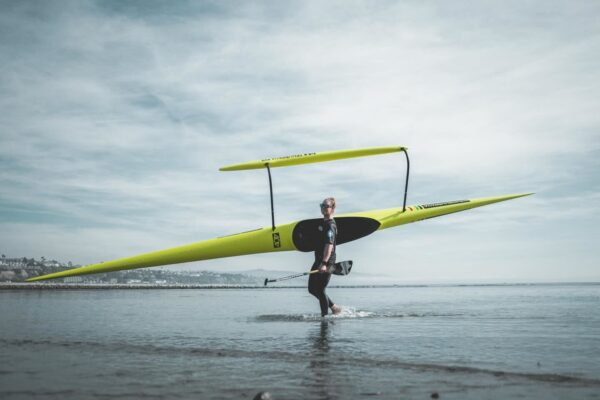
There are very specific moments in a paddler’s life when they realize they’ve made a questionable decision. I have had my fair share, and Saturday was no exception.
For me, it was sitting in my V1, bobbing around at the start line, watching others surf their canoes in the channel, while I calmly thought, Well… I literally can’t turn around.
No rudder.
No escape plan.
Guess I’m going.
I was in town, had a V1 again, and somehow convinced myself that signing up for the first race of the 2026 Vaʻa Series was a good idea. The week leading up to it was stacked with storms, and with every forecast update my nerves climbed a little higher. But I had registered, and told people about it so showing up mattered.
The rain did give us a brief break on race day… but the wind, king tide currents, and swell absolutely did not get the memo.
The paddle out to the start line was pure foreshadowing. Guys were already surfing their canoes while “warming up”. The channel looked alive. I remember thinking, This seems aggressive. But again, no rudder. No turning around. Forward it is.
I bobbed around waiting for the start, burning precious energy just trying to keep the canoe pointed in a sort of acceptable direction. I kept reminding myself to stay calm. Panic paddling would not help. Also, it still couldn’t turn around; no rudder.
When the race finally started, the pack spread out quickly. Heading into the wind wasn’t terrible, until I found myself smack in the current line. A visible trail of trash and debris marked it, and for a brief moment I was actually thankful not to have a rudder, rudders are a drag.
I focused on maintaining a calm, relaxed stroke, knowing this was going to be a long race. The first right-hand turn took everything I had, dragging my right foot hard to convince the canoe that yes, we really did want to go that way.
The second leg delivered ama-side swell, wind, and single-side paddling. I officially felt like a dragon boater.
I eventually made it to the second turn. Right leg in again. More effort. The boat finally came around and that’s when I saw it. Paddlers catching swell. Chee-hooooooo. Oh wait. They are going everywhere. Toward Catalina. Toward shore. Toward places I’m pretty sure were not on the course map.
I took a deep breath and told myself, just do the best you can not to spin out.
Shockingly, it worked. I caught a few bumps and spun out only a couple of times. It turned into a crash course in stroke discipline. You could not take that one extra stroke, do it, and you’d instantly lose your line. Turns out my summer of chasing Louis in the afternoon surf paid off.
As we approached the harbor, the current shifted again and everything changed. I struggled to get the canoe to turn down into the channel. I genuinely thought it wasn’t going to happen. When it finally did, I tried to tuck next to the jetty but my boat preferred staying right in the current.
That’s when I spotted a local NAC paddler ahead of me and thought, Just follow him. He knows where he’s going. I locked in behind him and calmly paddled through the bay, having a full-on out-of-body experience while processing the fact that I had just survived those conditions.
Huge thank you to Kel, NAC, and everyone who makes this V1 series possible. This race series has clearly inspired paddlers across California to level up their V1 game. You can see the results on the international stage, especially at the last IVF race in Brazil. So many of our paddlers performed so well because of races like this.
Hard race.
Big lessons.
A lot of foot-dragging.
And in case I ever forget why I do this, rudders are a drag.
Kathy Sheets
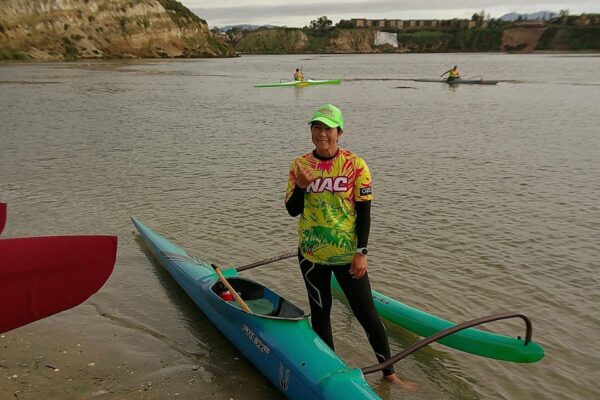
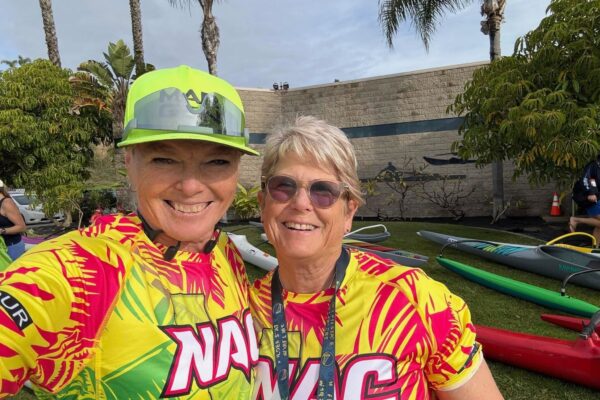
I kicked off the new year at the VAA California race and couldn’t ask for a better way to start 2026 wearing this rad jersey. Conditions were challenging but honestly really enjoyable—the kind that keeps you present and engaged the whole time. I raced in an ARE V1 Marara, the same I train in at home.
The race was well run and organized, and the people out there made it even better. As someone who trains and races out of Florida, it’s really special to be able to show up and compete out here. I appreciated the real-time decisions made about the course to maximize the downwind portion—such a great example of how dialed-in and supportive this community is. You can feel how much care and respect there is for this unique sport.
Grateful to be part of it!
Kelly Truitt